Whistleblowers paying a high price for freedom
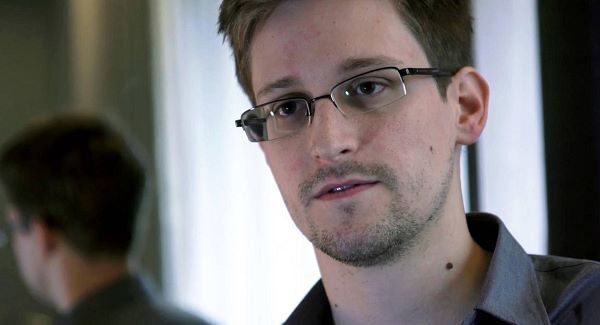
THOMAS Drake is one of the few people who understands what the future may hold for Edward Snowden.
His advice: “Be lawyered up to the max, and find a place where it’s going to be that much more difficult for the United States to make arrangements for his return… And always make sure you know what’s behind you.”
Drake, a 56-year-old former intelligence official at the National Security Agency, was prosecuted under the Espionage Act in 2010 for allegedly revealing classified information about the agency’s sweeping warrantless wire-tapping programme. The US government later dropped all but a mis-demeanour charge.
“For me this is a déjà vu,” said Drake, adding that Snowden’s previous comfortable life was over.
“When you offer up information about the dark side of the surveillance state, they don’t take too kindly to it. They want to stay in the shadows.”
Drake, one of six people indicted for leaking secret information since Barack Obama became president in 2009, said the FBI investigated him because it believed he was the source of a New York Times story published in Dec 2005 that first revealed the NSA’s wire-tapping programme. He says he was not the source of that information.
“My life was turned upside down and inside out,” said Drake, who now earns an hourly wage as a technical expert at an Apple store.
“I know what it’s like to live in a surveillance state because the surveillance state was on me, riding me, for so many years. They obviously wanted to do me in. It was relentless. I wouldn’t want any American to go through it.”
Snowden, 29, who worked for three months for Booz Allen Hamilton and was contracted out as a systems administrator to the NSA threat operations centre in Hawaii, disclosed last weekend he was the source of last week’s reports in The Guardian and The Washington Post, saying he acted out of conscience to protect “basic liberties for people around the world”.
Snowden said he had thought long and hard before publicising details of an NSA programme code-named Prism, saying he had done so because he felt the US was building an unaccountable and secret espionage machine that spied on every American.
US officials have defended the data collection efforts as vital to averting terrorist attacks and other threats against the United States, and insisted there were strict limits on any domestic spying.
Drake, who resigned from the NSA in 2008, said the data released by Snowden validated concerns he began raising internally as early as 2002 about a huge spike in domestic surveillance after the Sept 11, 2001, hijacking attacks.
Drake said he raised his concerns first with the Pentagon’s inspector general and then worked as a government source on two congressional investigations.
“None of it surprises me. What you’re seeing here is simply the continuation of what was done in absolute secrecy after 9/11. Those programmes were put in place and simply expanded.”
Drake, who worked in signals intelligence during the Cold War, insists he never disclosed classified information. He says Snowden was someone who seems to have done so to serve the public interest.
“History can judge the rest of him, but if Ellsberg’s case is any indication, then that long arc of history will probably bend toward seeing him as a whistleblower.”
Daniel Ellsberg was a national security analyst who passed defence documents known as the Pentagon Papers to The New York Times during the Vietnam War.
Snowden flew to Hong Kong on May 20 so he would be in a place that might be able to resist US prosecution attempts. He also mentioned Iceland as a possible refuge, and Russia has said it would be willing to consider granting him asylum.
Asked if he still believes what he did was worth it, Drake had no doubts: “Is freedom worth it? Is liberty worth it? Is not living in a surveillance society worth it?
“If you don’t want to live it, then you’ve got to stand up and defend the rights and the freedoms that prevent that from actually happening.”
CONNECT WITH US TODAY



Be the first to know the latest news and updates